

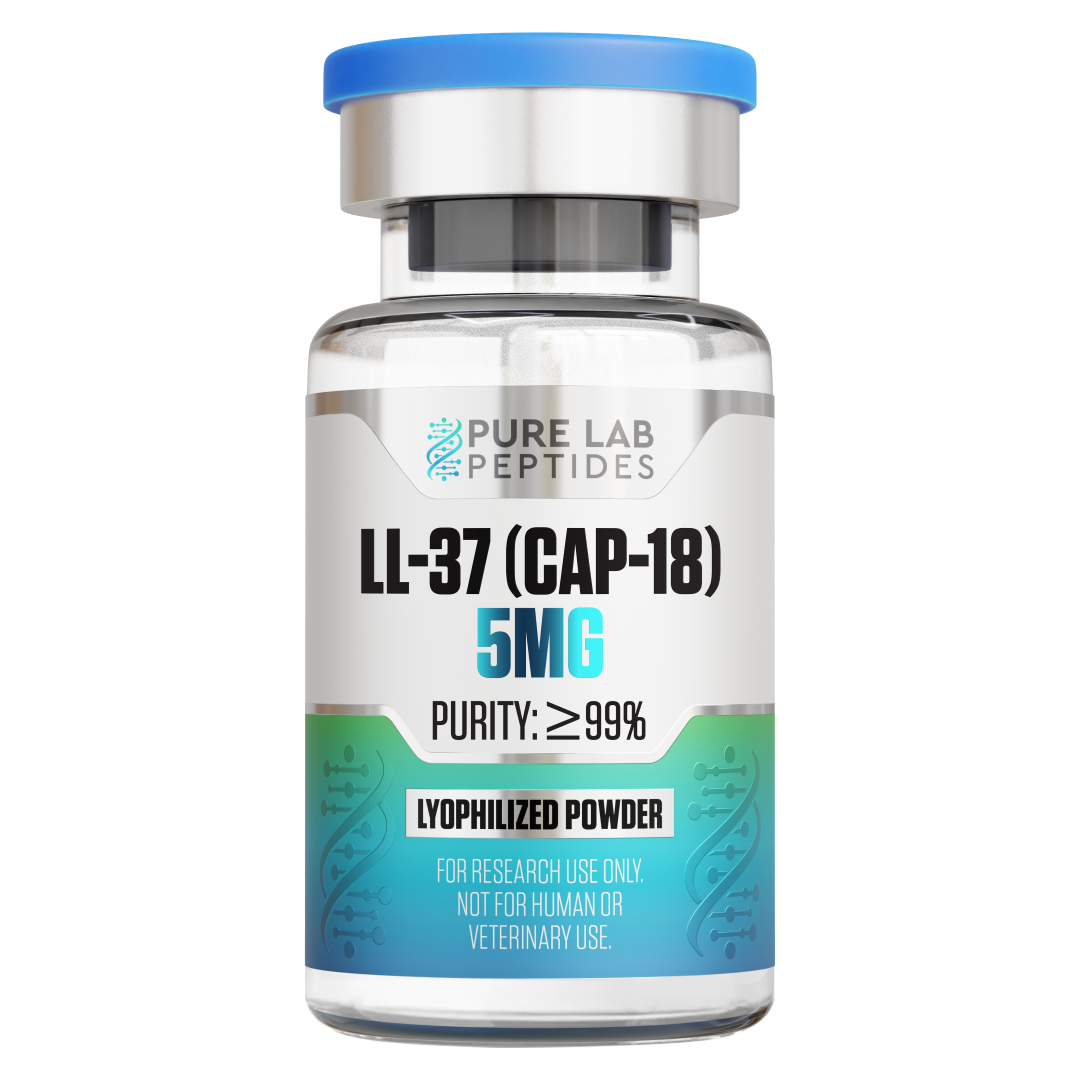
Researchers who want to buy LL-37 for research should evaluate the compound through a research-use-only documentation lens, not through consumer-facing product language. LL-37 is described in scientific databases as a cathelicidin antimicrobial peptide associated with the human CAMP gene and the hCAP-18/CAP-18 precursor system [1], [2]. For a product-page research guide, the key questions are compound identity, certificate of analysis review, analytical testing, lot traceability, and clear RUO positioning.

Researchers evaluating where to buy LL-37 for research should first review RUO labeling, the batch-specific certificate of analysis, peptide identity data, purity testing, lot traceability, and supplier documentation. LL-37 is a cathelicidin-family antimicrobial peptide in scientific literature, but product-page decisions should stay documentation-first [5], [9]. Products discussed in this article are intended for laboratory research use only and are not intended for human or animal consumption.
A commercial research query should be narrowed into a technical procurement question: does the listing provide enough evidence to evaluate LL-37 as a research material? That means the phrase “buy LL-37 for research” should lead to documentation review, not product claims.
The safer search intent is compound-centered. Researchers can compare peptide identity, COA availability, HPLC purity data, LC-MS identity support, and lot-level records without implying consumer use.
The first document to review is the batch-specific certificate of analysis. A useful COA should identify the peptide, lot number, test date, reported purity, and analytical method.
For peptide materials, HPLC is commonly used to separate and evaluate peptide mixtures, while mass spectrometry is widely used in peptide and protein analysis because it can support mass-based identity review [26], [27]. Those methods do different jobs, so a strong documentation file should explain how each method supports the research material record.
RUO labeling tells laboratory buyers how the material is positioned. It should keep the listing separate from clinical-use language, consumer outcomes, or study findings framed as product claims.
For LL-37, this is especially important because the literature spans antimicrobial peptide research, receptor models, epithelial-cell studies, and broader innate immune system context [18], [19], [21]. A product page should summarize that literature carefully and return the reader to COA, purity, identity, and lot documentation.
Research-use-only content should describe LL-37 as a laboratory material for qualified research settings. It should not translate published findings into personal-use guidance.
A product page can describe compound identity, peptide sequence considerations, published literature context, analytical testing, and supplier documentation. It should not promote outcomes, instructions, or claims outside RUO positioning.
Pure Lab Peptides product-page content should place LL-37 within antimicrobial peptide research and documentation review. That lane is supported by official references that connect LL-37 to the CAMP gene, cathelicidin antimicrobial peptide entries, and curated ligand records [1], [2], [5].
RUO positioning also affects tone. The page should speak to research buyers, lab managers, procurement teams, and scientific reviewers—not to consumers.
Product-page copy stays documentation-first by using neutral verbs: evaluate, review, compare, document, verify, and characterize. Those verbs keep the focus on research material assessment.
A documentation-first section should answer practical procurement questions. Does the COA match the lot? Is the peptide identity clear? Is the purity method named? Does the supplier keep the listing aligned with batch-level records?
LL-37 is described as a human cathelicidin antimicrobial peptide associated with the CAMP gene and hCAP-18/CAP-18 precursor terminology [1], [2]. RCSB PDB entry 2K6O lists a human LL-37 structure with 37 modeled and deposited residues and classifies the structure as an antimicrobial protein [4].
In research literature, LL-37 appears in antimicrobial peptide studies, membrane-interaction studies, chemotaxis models, epithelial-cell expression studies, and broader cathelicidin reviews [9], [10], [11], [18].
The CAMP gene encodes cathelicidin antimicrobial peptide, and related official database records connect the target to CAP18, FALL39, and LL37 synonyms [1], [2]. PubChem lists LL-37 under CID 16198951 with molecular formula and molecular weight data, which can support identity cross-checking during documentation review [3].
For procurement teams, the point is not to memorize every synonym. The point is to confirm that the product listing, COA, and analytical records refer to the same canonical LL-37 peptide.
The CAP-18/hCAP-18 context matters because LL-37 is discussed in the literature as a C-terminal peptide related to the cathelicidin precursor system. Work on FALL39 and granulocyte processing helped establish the relationship between precursor terminology and LL-37 naming in the research record [7], [8].
This is why a COA should avoid vague naming. The document should make it clear whether the tested material is LL-37 peptide, a precursor-related protein, a derivative, or another cathelicidin-family material.
Sequence and C-terminal details matter because peptide identity depends on the actual amino acid chain, terminal state, and analytical match. RCSB’s LL-37 structure record reports a 37-residue human cathelicidin antimicrobial peptide entity and links the structure to UniProt P49913 [4].
Small changes in sequence or terminal chemistry can change the identity of a peptide material. That is why researchers should compare the product listing, COA, molecular weight, and analytical report rather than relying on the name alone.
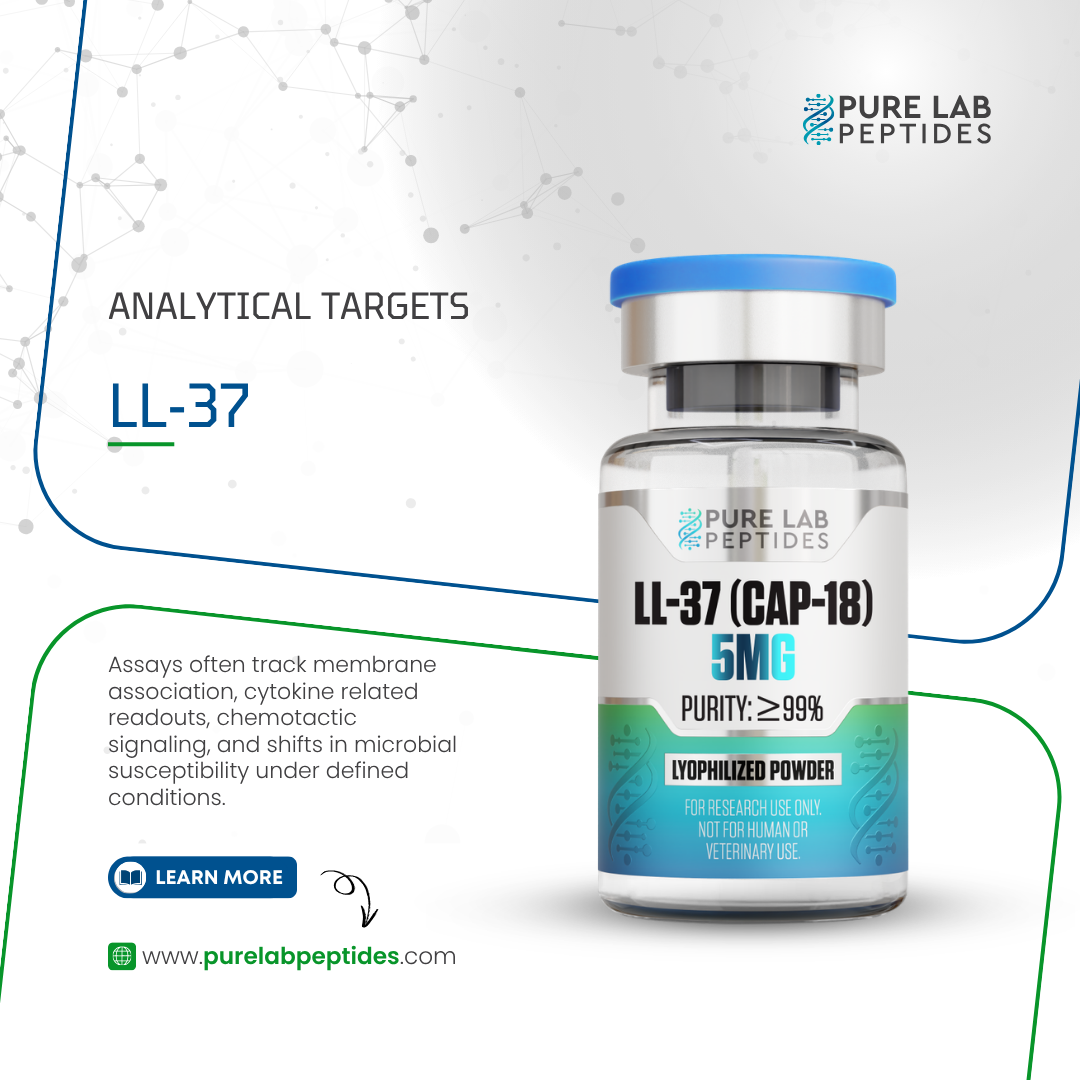
LL-37 is widely discussed as an antimicrobial peptide in cathelicidin-family literature [9], [18], [20]. The term antimicrobial peptide describes a research class, not a product claim.
For LL-37 product-page evaluation, the research category helps organize the page. It points to peptide identity, membrane interaction, microbial model literature, receptor context, and assay interpretation.
Antimicrobial peptide classification gives the article a research lane. Dürr and colleagues describe LL-37 as a 37-residue amphipathic helical peptide with broad antimicrobial activity in the literature [9].
The classification also helps procurement teams know which documentation details matter. For a peptide in this lane, purity, identity, sequence consistency, and lot traceability are central.
Published literature has evaluated LL-37 antimicrobial activity in model systems, including studies against Gram-negative and Gram-positive organisms [13], [18]. Sancho-Vaello and colleagues investigated LL-37 interactions with bacterial cell wall components and membrane-mimic systems, reporting structural observations relevant to membrane-disruption models [17].
Those findings belong in research context. They should not be used as product performance statements.
Gram-positive and Gram-negative bacteria appear in LL-37 literature because antimicrobial peptide studies often compare activity across different microbial model types [13], [18]. The outer membrane of gram-negative bacteria and peptide-membrane interactions are common research themes in this area [17].
For a product page, this supports semantic coverage. It does not change the procurement priority: verify the peptide, lot, COA, and analytical records first.
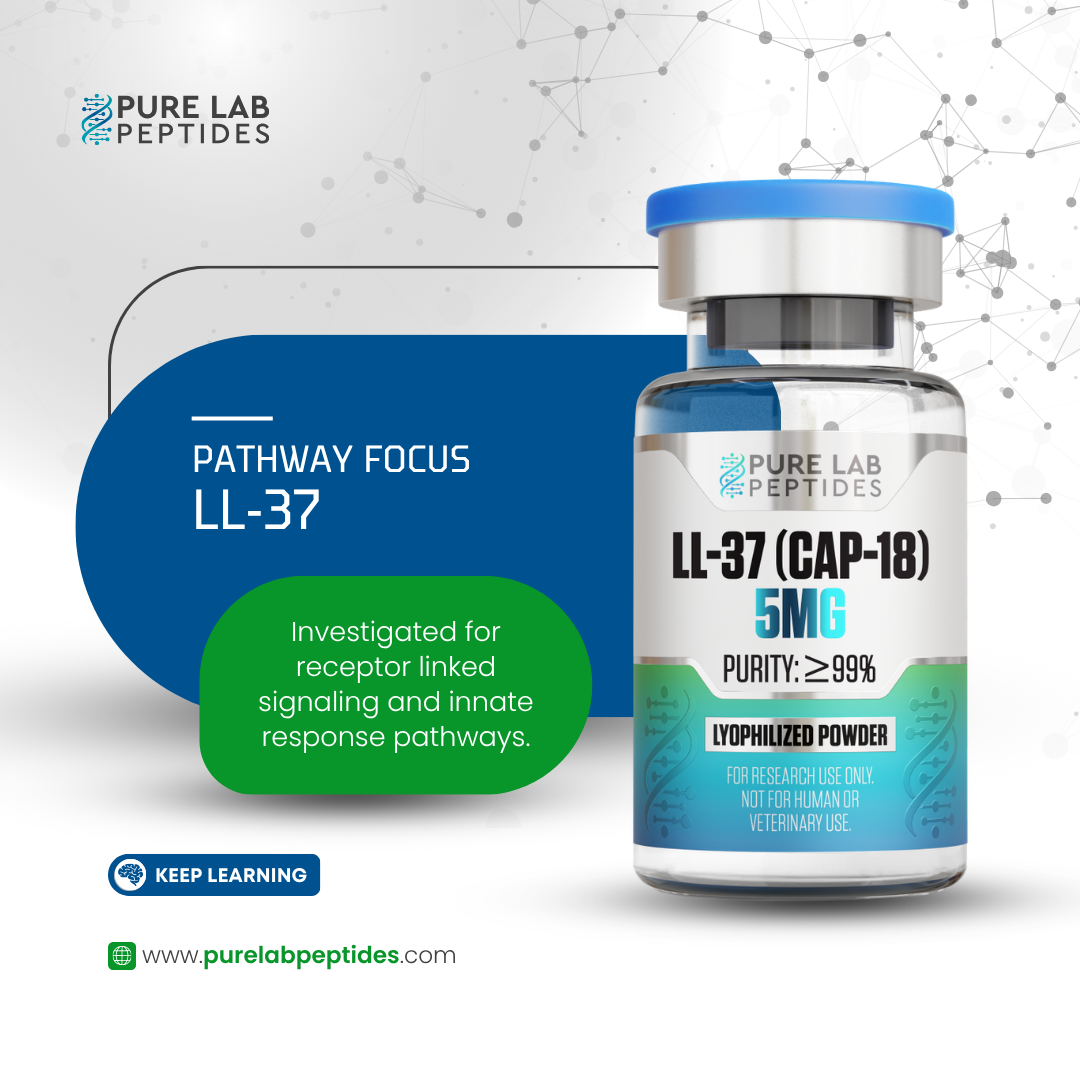
LL-37 literature also includes receptor and chemotactic signaling context. The IUPHAR/BPS ligand page identifies LL-37 as a cathelicidin-family antimicrobial peptide and notes FPRL-1-mediated chemotaxis in human neutrophil models [5].
Yang and colleagues reported that LL-37 could activate formyl peptide receptor-like 1 models in chemotaxis-related experiments [11]. This is a research-model statement, not product-use guidance.
Formyl peptide receptor models help explain why LL-37 is not discussed only as a membrane-active antimicrobial peptide. IUPHAR/BPS lists FPR2 as a class A G protein-coupled receptor in the formylpeptide receptor family [6].
Research literature has examined LL-37 in relation to FPRL1/FPR2-linked chemotactic signaling, calcium mobilization, and leukocyte-related model systems [11], [12]. Product-page copy should describe this as pathway context only.
Receptor context is not a product claim. It helps explain why researchers may study LL-37 across antimicrobial, epithelial, signaling, and cell-migration models.
A safer product page uses receptor language to guide literature interpretation. It should not suggest that receptor activity creates any consumer outcome.
LL-37 appears in innate immune system literature because cathelicidins are host-defense peptides studied at the interface of microbial challenge, epithelial barriers, leukocyte biology, and signaling models [18], [20], [21]. The phrase “innate immune system” should remain an academic research category on an RUO page.
The product-page role is to help researchers interpret why these themes appear in the literature and what documentation should be reviewed before procurement.
Epithelial-cell literature is relevant because studies have reported LL-37/hCAP-18 expression in differentiated human colon epithelium and in airway epithelial contexts [14], [15]. Keratinocyte and epithelial-cell models also appear in LL-37 expression research [16].
That literature supports topical depth. It should not be framed as an intended product outcome.
Cell signaling models can show how LL-37 is studied in pathway-specific experiments. For example, literature has evaluated LL-37 interactions with Toll-like receptor-related signaling contexts and nucleic-acid or ligand-associated model systems [22].
These models can help researchers understand study design. They cannot replace lot-level COA review or analytical identity verification.
Inflammation context requires careful framing because it can drift into clinical or consumer-facing language. Reviews discuss LL-37 in inflammation-related research, but an RUO product page should keep those discussions tied to models, receptors, pathways, and literature limits [21].
A safer wording pattern is: “published literature has examined LL-37 in inflammation-related research models.” That keeps the statement academic and avoids product claims.
Published literature can explain what researchers have investigated. It cannot establish what an RUO product is for.
LL-37 literature includes antimicrobial peptide reviews, structural studies, epithelial-cell expression papers, receptor work, and broader cathelicidin-family summaries [9], [17], [18], [19], [20]. A product page should use these sources to organize research context and then return to documentation.
Published literature can support a research overview of LL-37 classification, CAP-18 context, antimicrobial peptide studies, receptor models, and analytical identity considerations. Official databases can support identity terms, gene symbols, molecular formula, and structure records [1], [2], [3], [4].
The literature can also help readers understand why LL-37 is semantically connected to cathelicidin antimicrobial peptide, epithelial cells, chemotaxis, Gram-positive and Gram-negative models, and signaling pathways [5], [11], [14], [18].

Study findings should stay separate from product claims because model-specific evidence can be misread when placed on a commercial page. Phrases about product effects, clinical outcomes, or wound healing can become unsafe if separated from the study model and presented as product positioning.
Some published literature outside the scope of RUO product use has examined this compound class in human study settings. That literature should not be interpreted as a use claim for research-use-only materials.
A research buyer should evaluate evidence in layers: official database identity, peer-reviewed literature, analytical method documentation, COA consistency, and supplier transparency. No single layer replaces the others.
| Research Area | What Literature Examines | Evidence Type | RUO Interpretation |
|---|---|---|---|
| Compound identity | CAMP, CAP18, LL37 synonyms, formula, structure records [1], [2], [3], [4] | Official database | Supports identity review and documentation matching |
| Cathelicidin background | LL-37 in antimicrobial peptide and cathelicidin-family literature [9], [20] | Review literature | Explains research class, not product positioning |
| Antimicrobial peptide models | Gram-positive, Gram-negative, and membrane-interaction models [13], [17], [18] | In vitro and review literature | Supports assay context only |
| Receptor context | FPRL1/FPR2-linked chemotactic signaling models [5], [6], [11], [12] | Curated database and mechanistic literature | Supports pathway interpretation |
| Analytical verification | HPLC, mass spectrometry, LC-MS/MS, and method validation concepts [23], [24], [25], [26], [27], [28] | Standards, guidance, and analytical literature | Supports documentation review |
Start with official databases for identity. UniProt, NCBI Gene, PubChem, RCSB PDB, and IUPHAR/BPS provide curated reference points for compound naming, gene symbols, molecular data, structure, and ligand context [1], [2], [3], [4], [5].
Then use peer-reviewed literature for mechanism and model context. Vendor pages, forums, and unsourced summaries should not be used as scientific evidence for an RUO product page.
Study scope matters. A paper may describe a specific in vitro assay, a cell model, a microbial model, or a structural system, and each model has limits.
A stronger product-page interpretation says what the literature examines and what it cannot prove for a research material. That separation protects the page from turning academic findings into product claims.

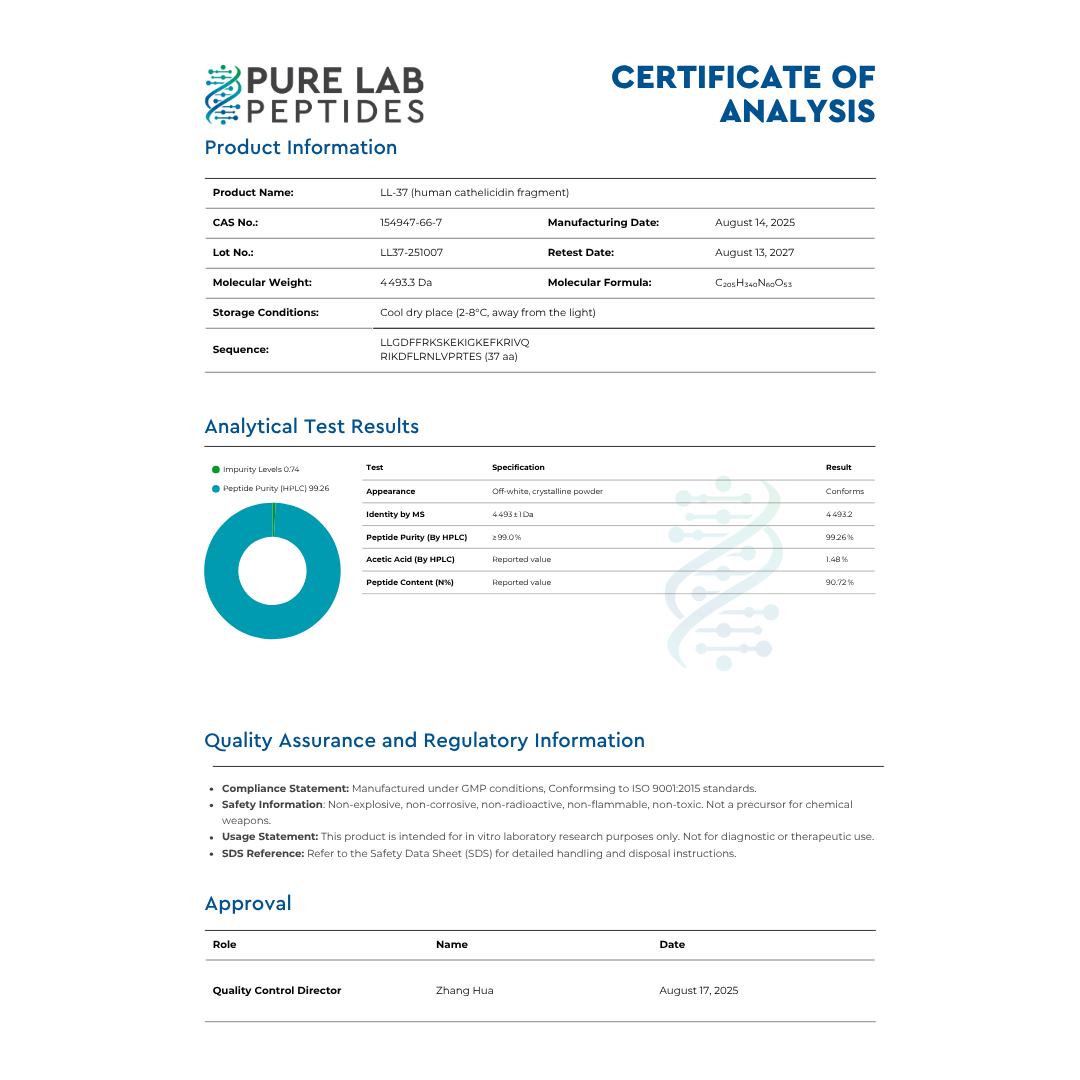
The certificate of analysis is the core procurement document for an LL-37 peptide listing. It should help researchers connect the product name, lot number, purity result, testing method, and analytical identity support.
A COA is not a substitute for reading the literature. It is the batch-specific file that connects a research material to its documented quality attributes.
A certificate of analysis should show the compound name, lot number, test date, reported purity, analytical method, and any identity-supporting test notes. FDA guidance on analytical procedures discusses documentation of identity, quality, purity, and related validation data in regulated analytical contexts, which is useful background for understanding method documentation expectations [24].
For RUO procurement, the practical standard is consistency. The COA, label, and listing should tell the same story.
Researchers compare lot-specific documentation by checking whether the product name, lot number, purity value, COA date, and analytical method match across records. If the listing says LL-37 peptide but the COA uses unclear naming, the supplier file should clarify the relationship before procurement.
Lot-level comparison is especially important when a page uses synonyms such as LL37, CAP-18, hCAP18, human cathelicidin, or cathelicidin LL-37. Those names should not create ambiguity.
COA dates help research buyers understand when the listed batch was tested. Method notes explain whether a purity value came from HPLC, whether identity was supported by LC-MS, and whether additional data were available.
Method details matter because HPLC can support purity review through chromatographic separation, while mass spectrometry can support molecular mass and identity assessment [26], [27]. These methods are complementary, not interchangeable.

Analytical testing should connect peptide identity and purity to documented methods. HPLC, LC-MS, and mass spectrometry each contribute a different layer of evidence [26], [27], [29].
A documentation-focused lab-test verification workflow can look like this:
HPLC supports peptide purity review by separating components in a mixture so a chromatogram can be used to evaluate peak distribution and relative purity. Mant and Hodges describe HPLC modes used for peptide analysis and purification, including reversed-phase and other separation approaches [26].
For procurement review, the question is simple: does the COA identify the HPLC method clearly enough to support the reported purity value?
LC-MS combines liquid chromatography with mass spectrometry, allowing analytical workflows to connect chromatographic separation with mass-based evidence. LC-HRMS literature describes peptide-related identification and impurity characterization workflows where mass data support structural review [29].
For LL-37, LC-MS evidence should be tied to the batch file. A generic claim that a peptide is “tested” is weaker than a lot-specific record that names the method and links it to the material.
Mass spectrometry adds molecular-mass and fragmentation-based evidence that can support peptide identity review. Reviews describe mass spectrometry as a versatile tool for peptide and protein analysis, while peptide mapping literature shows how LC-MS/MS can contribute to sequence-related confirmation in characterization workflows [27], [28].
For a product page, the safe claim is not that one test proves everything. The stronger statement is that mass spectrometry can support identity review when paired with batch-specific documentation.
Lot traceability connects the product listing to the actual batch being evaluated. Without lot-level records, researchers have less context for purity, identity, COA date, and storage documentation.
In peptide procurement, the lot file should be easy to connect to the label. That is especially important when a product page uses several scientific synonyms.
Lot numbers matter because they anchor analytical records to a specific batch. A purity value has little procurement value if the record cannot be tied to the material being evaluated.
Lot numbers also support repeatability. When research teams compare suppliers or reorder materials, batch-level records help them track which documentation belongs to which research material.
Batch records support repeatable sourcing by preserving the identity, test method, purity result, COA date, and storage file for a specific material. They also help technical teams compare documentation quality over time.
This is not only an administrative detail. In research workflows, documentation consistency supports internal review, purchasing controls, and study reproducibility.
Supplier documentation should make it easy to evaluate LL-37 as a research peptide without leaning on marketing claims. A strong supplier file should include RUO labeling, compound identity, COA availability, purity method, identity testing, lot traceability, and storage documentation.
For research buyers, the question is not which page sounds most persuasive. The question is which listing provides transparent, reviewable records.
Research buyers should compare COA availability, lot matching, analytical method disclosure, label consistency, storage documentation, and whether the page avoids product-claim language. Analytical-method guidance from FDA and ICH Q2(R2) emphasizes the importance of demonstrating that analytical procedures are suitable for their intended analytical purpose [25].
In the RUO setting, that principle translates into a practical review standard. The method should fit the documentation claim being made.
Labels should align with COA documentation on compound name, lot number, catalog identity, and storage notes. If the label says LL-37 peptide and the COA uses a different synonym, the supplier file should make the relationship clear.
Researchers should also check whether the label states research-use-only positioning. Clear labeling helps keep the page aligned with laboratory procurement rather than consumer-facing intent.
Storage documentation fits into the research record because peptide materials can be sensitive to environmental conditions, sequence-dependent stability, and handling history. Literature on peptide standards for mass spectrometry emphasizes the need for consistent generation, quantification, storage, and handling practices in analytical workflows [30].
For product-page evaluation, storage language should remain record-focused. It should identify supplier documentation and laboratory recordkeeping expectations without turning into practical personal-use instructions.
Misunderstandings usually begin when scientific terms are pulled out of their research context. LL-37 has a large literature footprint, so product pages need extra care.
Common misunderstandings include:
Antimicrobial protein language needs context because LL-37 can be described through several related terms: antimicrobial peptide, cathelicidin antimicrobial peptide, human cationic antimicrobial protein, hCAP18, CAP-18, and CAMP [1], [2], [5]. These terms are not always interchangeable in a procurement file.
A product page should use the canonical compound name first. Synonyms can help with literature context, but the COA and label should make identity clear.
Pathway relevance can drift into product claims when a page treats receptor signaling, antimicrobial activity, or epithelial-cell literature as product performance language. That risk increases when boundary-sensitive phrases are presented without model limits.
A safer approach is to state the model and the limitation. For example, “published literature has examined LL-37 in receptor and epithelial-cell models” is safer than implying a direct product outcome.
Procurement review should bring all evidence together: identity, COA, analytical testing, lot traceability, supplier documentation, storage records, and RUO labeling. This is the final check before a research buyer evaluates a supplier listing.
The goal is not to create a consumer buying guide. The goal is to help laboratory teams evaluate documentation quality.
Pure Lab Peptides supplies compounds for laboratory research use only. Products are not intended for human or animal consumption, diagnostic use, therapeutic use, clinical use, veterinary use, or as food, drugs, cosmetics, dietary supplements, or household products. Researchers are responsible for ensuring lawful, appropriate handling and use in accordance with applicable regulations and institutional guidelines.
A documentation-first review supports the next research decision by reducing ambiguity. If the LL-37 product listing, COA, label, batch number, and analytical testing records align, the procurement team has a stronger basis for evaluating the material.
For research teams comparing peptide suppliers, prioritize COA availability, transparent RUO labeling, analytical method disclosure, and lot-level documentation before selecting any research-use-only peptide.
Researchers should consider documentation quality before they buy LL-37 for research. A research-focused review should include RUO labeling, a batch-specific COA, peptide identity records, purity data, lot traceability, and supplier documentation. The goal is to evaluate the material as a laboratory research peptide, not as a consumer product or outcome-focused compound.
Research-use-only means LL-37 is intended solely for laboratory research contexts. Product-page language should focus on compound characterization, research documentation, analytical testing, peptide identity, and batch-specific documentation. RUO positioning keeps the page separate from consumer-facing claims and keeps procurement review centered on records such as the COA, lot number, and label consistency.
Researchers review a peptide COA for LL-37 because it helps connect the listed compound to batch-specific documentation. A strong COA should identify the compound name, lot number, test date, reported purity, and analytical method. It should also align with the product label and supplier documentation so research teams can evaluate consistency before procurement.
HPLC and LC-MS support LL-37 documentation review by addressing different parts of analytical testing. HPLC can support peptide purity review through chromatographic separation, while LC-MS can support peptide identity review through mass-based analytical data [26], [27]. Research teams should look for method notes that connect those records to the same batch.
LPS and toll-like receptor 4 context can appear in LL-37 literature as part of receptor research and pathway-model interpretation. Terms such as bacterial lipopolysaccharides, pathogen models, and cell membrane interaction should be read as research context. They should not be converted into product claims, procurement promises, or consumer-facing positioning.
Published literature should be interpreted as research context for LL-37 materials. Studies may discuss in vitro models, preclinical literature, cell proliferation, microbial systems, or organisms such as Staphylococcus aureus, Pseudomonas aeruginosa, and Candida albicans. Those references help frame scientific background, but procurement decisions should still focus on COA review, analytical testing, and lot traceability.
The following authors are recognized for published research that helped shape the scientific context discussed in this article.
Author profile: PubMed author search for “Yang D”
De Yang has contributed foundational research on the human cathelicidin antimicrobial peptide LL‑37, particularly in the context of its interaction with formyl peptide receptor‑like 1 (FPRL1) and its immunological correlates in in vitro settings. Their work appears in multiple peer‑reviewed articles that investigate the receptor interactions and chemotactic activities of LL‑37, helping to inform the broader academic landscape on how this cationic antimicrobial peptide interacts with leukocytes and innate immunity models, independent of any consumer or therapeutic framing.
Selected publications:
Author profile: Bohrium profile for Z Oren
Ziv Oren has authored influential studies on the structural and mechanistic properties of linear amphipathic α‑helical antimicrobial peptides, including LL‑37 and related sequences. Their research explores peptide–membrane interactions, amphipathic structural organization, and the molecular basis of antimicrobial activity, contributing important mechanistic context to the academic literature on antimicrobial peptides and peptide structure–function analysis within laboratory research paradigms.
Selected publications:
This research disclaimer clarifies the use of language and literature interpretation surrounding LL-37 in peptide research. In neuropeptide and antimicrobial peptide content, terms such as nootropic, cognitive enhancement, nasal spray, peptide therapy, immune response, effects of LL-37, and bioavailability can drift into consumer-facing, administration-focused, clinical-use, wellness, or product-claim language if presented outside a model-specific research context.
Here, these terms are included solely as research-language examples, not as product uses, instructions, or outcomes. The focus remains on LL-37 compound identity, COA review, analytical testing, peptide purity, lot traceability, research-use-only labeling, product documentation, and published literature boundaries, ensuring that laboratory research interpretation is separate from any consumer or clinical implication.
Discount Applied Successfully!
Your savings have been added to the cart.




There are no reviews yet.