

Pure Lab Peptides created this guide for laboratory teams evaluating where to buy NAD+ for research while keeping the page focused on research-use-only documentation. NAD+ is the oxidized form of nicotinamide adenine dinucleotide, a nucleotide coenzyme involved in redox chemistry and cellular energy research models [1]. This article is a product-page research guide for compound identity, COA review, analytical testing, lot traceability, and RUO boundaries.
Researchers looking to buy NAD+ for research should first review RUO labeling, compound identity records, batch-specific COA documentation, analytical testing details, lot traceability, and storage documentation. Products discussed in this article are intended for laboratory research use only and are not intended for human or animal consumption. NAD+ literature should be read as research context, not as product-use guidance [4].
The phrase buy NAD+ for research carries commercial intent, but the safe product-page answer is documentation-first. A research buyer is not looking for consumer claims. The relevant questions are whether the compound name is clear, whether the record identifies NAD+ consistently, whether the COA is batch-specific, and whether analytical data support the listing.
NAD+ also requires careful entity handling. It is commonly discussed beside NADH, nicotinamide riboside, and nicotinamide mononucleotide in metabolic literature, but those related entities do not replace the need to verify the exact material listed on the product page [5].
Before procurement, a lab team should review the product description, the COA, the lot number, the COA date, and any available purity or identity method notes. FDA analytical-method guidance describes analytical procedures as documentation used to support identity, quality, purity, and related material attributes in regulated contexts; RUO pages can use that documentation logic without implying clinical or product-use positioning [23].
For NAD+ research materials, documentation should tell a consistent story. The label, product page, COA, and batch record should use the same compound name and lot reference.
RUO labeling helps define the page’s intended research context. FDA guidance on research-use-only labeling for IVD products explains that RUO labeling is tied to research positioning rather than diagnostic positioning [26].
For this product-page article, the practical boundary is straightforward: documentation and literature context are appropriate; personal application, clinical positioning, or consumer outcome language is not.
A NAD+ product page should serve qualified laboratory buyers and research teams. It should not read like a wellness article, a supplement article, or a consumer product review.
RUO copy should answer product-page research questions: What is the compound? What documentation is available? What does the COA show? Which analytical methods support identity or purity review? How does the literature frame the compound without creating a claim?
RUO positioning covers research material evaluation, compound identity, literature context, and documentation review. It does not create directions for non-laboratory application.
In the FDA’s IVD labeling context, research-phase products may carry a “For Research Use Only” statement when they are not represented for diagnostic procedures [27]. This page applies that same documentation discipline to product-page content: label clarity, intended research framing, and avoidance of claim drift.
Product documentation keeps commercial intent from becoming product-performance copy. For Pure Lab Peptides, the research-safe focus is COA access, lot traceability, analytical testing, product description accuracy, and clear RUO labeling.
This also protects the reader experience. A technical buyer can compare records without being pushed toward claims that belong outside a research-use-only product page.
NAD+ is the oxidized form of nicotinamide adenine dinucleotide. ChEBI describes NAD+ as a compound involved in redox reactions that carry electrons from one reaction to another [1].
Research literature often discusses NAD+ with NADH because the NAD+/NADH pair is central to redox chemistry. That scientific context belongs in a research guide, provided it remains separate from product claims.

Nicotinamide adenine dinucleotide contains adenine, nicotinamide, ribose units, and phosphate groups. ChEBI lists NAD+ with formula C21H28N7O14P2 and average mass 664.438 [1]. KEGG also lists NAD+ as compound C00003 with synonyms including nicotinamide adenine dinucleotide and beta-NAD+ [2].
That makes canonical naming important. A product-page record should distinguish NAD+, NADH, and related precursor compounds rather than merging them into one broad category.
Canonical compound naming supports search relevance and procurement review. “NAD+,” “nicotinamide adenine dinucleotide,” and “beta-NAD+” may appear in database or literature contexts, but product documentation should identify the exact listed research material.
For technical procurement teams, naming consistency reduces ambiguity. It also helps align the product page with the COA, label, and analytical record.
A safe NAD+ product description should be neutral. It should identify the compound, the RUO context, and the documentation available for review.
It should not frame NAD+ as a supplement, wellness product, or consumer-facing outcome product. The product page can explain literature context without turning that literature into a purchase claim.
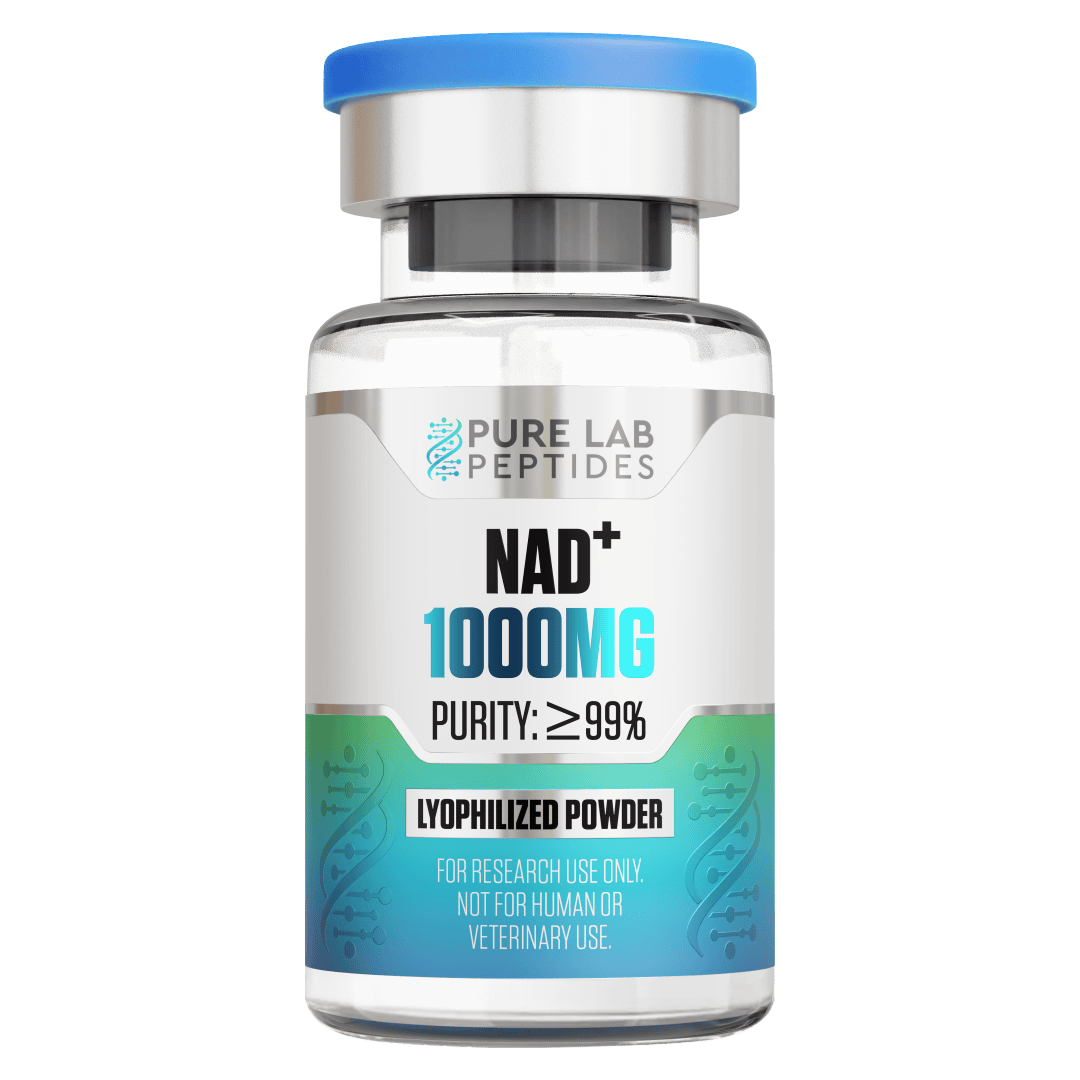
A neutral product description should include the compound name, research-use-only status, documentation availability, and analytical testing context. If the catalog includes amount or packaging information, those details should remain catalog specifications, not instructions.
A stronger product description also clarifies what NAD+ is not. NAD+ is not a peptide sequence, so sequence verification language should not be used as though it were a peptide chain.
Molecular identity supports research review because official database records and analytical records provide stable reference points. HMDB lists NAD with chemical formula C21H27N7O14P2 and average molecular weight 663.4251 for a related database representation [3]. Different databases may represent charge or protonation state differently, which is why product records should be internally consistent.
For procurement teams, the key is not to force every database synonym into copy. The key is to confirm that the product listing and batch documentation match.
NAD+ is widely described as a redox cofactor and enzyme substrate in cellular metabolism research. Reviews discuss its role in redox chemistry, energy metabolism, DNA repair, chromatin-related processes, and NAD-consuming enzyme systems [4].
That scientific background is useful for a product page only when framed as literature context. It should not imply any direct outcome from a specific RUO material.
Coenzyme context frames NAD+ as a molecule that participates in enzyme-linked redox reactions. ChEBI classifies NAD+ with cofactor and coenzyme roles [1].
In laboratory research, this supports discussion of pathway models, redox pairs, enzyme systems, and analytical measurement. It does not support consumer-facing claims.
Published reviews describe NAD+ as relevant to metabolism and DNA repair because NAD+ is connected to redox reactions and NAD-consuming enzymes such as PARPs and sirtuins [11]. PARP and sirtuin literature discusses NAD+ as a shared substrate in pathways tied to genome maintenance and cellular stress-response models [12].
The safer interpretation is model-specific. The literature can support pathway context, but it should not be converted into a product-use claim.
NAD+ appears in cellular energy research because the NAD+/NADH redox pair connects glycolysis, the tricarboxylic acid cycle, and mitochondrial oxidative phosphorylation models [6]. Reviews also discuss NAD+ compartmentalization and mitochondrial bioenergetics as active areas of research [7].
That makes NAD+ a relevant compound in metabolic and mitochondrial research. It does not make the product page a wellness guide.
Bioenergetics models use NAD+ and NADH to describe electron transfer and redox state. The NAD+/NADH redox couple has been reviewed as a regulator of glycolysis and mitochondrial oxidative phosphorylation research models [9].
For product-page writing, the safest phrase is “cellular energy research context.” This keeps the discussion scientific without making consumer-facing promises.
Pathway relevance means a compound appears in a studied biochemical system. It does not mean a product has a claimed outcome.
This distinction matters for NAD+. A literature review can explain why NAD+ is important to metabolism models, but a product page should focus on identity, purity review, documentation, and RUO labeling.
NAD+ literature often includes related entities such as NR and NMN. These are relevant to pathway mapping because they appear in NAD+ biosynthesis and salvage literature [15].
A product page for NAD+ should mention related entities only as literature context. It should not redirect the page into a separate precursor or supplement-style article.
Nicotinamide riboside is discussed in NAD+ precursor literature and salvage pathway research. A review on NR describes it as a salvageable NAD+ precursor in mammalian NAD+ biosynthesis literature [16].
For this product page, NR belongs in the same-lane literature map. It should not displace the canonical product entity: NAD+.
Nicotinamide mononucleotide appears in NAD+ biosynthesis literature and is often discussed beside NR. Reviews examine NMN and NR as related NAD+ precursor entities in metabolic research [15].
A careful product page can mention NMN and NR to help readers understand entity relationships. It should still keep procurement review centered on the NAD+ material being evaluated.
Published NAD+ literature should be framed by evidence type. Official databases support identity. Reviews support pathway context. Mechanistic studies support model-specific interpretation. Analytical-method papers support measurement and verification discussion.
The evidence landscape below is designed for product-page interpretation, not for consumer outcome claims.
| Research Area | What Literature Examines | Evidence Type | RUO Interpretation |
|---|---|---|---|
| Compound identity | NAD+ naming, formula, mass, and coenzyme classification [1] | Official database | Supports identity review, not product claims |
| Redox and metabolism | NAD+/NADH roles in energy metabolism models [6] | Review | Supports pathway context |
| NAD-consuming enzymes | Sirtuins, PARPs, and CD38/157 in NAD+ biology [11] | Review | Supports literature framing |
| DNA repair context | Genome maintenance and NAD+ pathway links [13] | Review | Supports cautious evidence interpretation |
| Analytical measurement | HPLC and LC-MS approaches for NAD+ measurement [18] | Analytical method | Supports testing discussion |
Appropriate study types include official database records, peer-reviewed reviews, in vitro studies, preclinical literature, and analytical-method papers. Some published literature outside the scope of RUO product use has examined this compound class in human study settings. That literature should not be interpreted as a use claim for research-use-only materials.
This page therefore uses literature to explain entity context and documentation needs. It does not translate study findings into product positioning.
Model limits matter because an in vitro observation, a preclinical finding, and a review-level summary are not the same type of evidence. The Metabolomics Standards Initiative has emphasized minimum reporting standards for chemical analysis, including experimental analysis, quality control, and metabolite identification [24].
The same discipline applies to literature reading. A product page should name the evidence type before interpreting it.
Research buyers should use an evidence ladder. Start with compound identity, then documentation, then analytical testing, then literature context.
This order keeps procurement decisions grounded in records. It also prevents pathway discussion from drifting into product-effect or product-performance language.
High-quality source signals include official databases, peer-reviewed review articles, original mechanistic literature, and analytical-method references. For NAD+ identity, ChEBI, KEGG, and HMDB provide useful baseline records [1], [2], [3].
For analytical discussion, source quality improves when the literature explains method selection, validation concepts, or identification confidence. ICH Q2(R2) describes analytical procedure validation as a way to demonstrate that a procedure is fit for its intended analytical purpose [22].
Evidence gaps require careful wording when a study examines a pathway but not the exact RUO material on the product page. They also matter when a source discusses a related precursor rather than NAD+ itself.
A safer wording pattern is: “Published literature describes NAD+ in redox and mitochondrial research models.” Avoid wording that implies the product creates an outcome.

Commercial research intent can be served without consumer-style claims. A product page can answer what research buyers should check, why documentation matters, and how COA/testing records support review.
It should not answer consumer-intent queries or make claims about product effects. RUO copy should stay anchored to compound identity, documentation, analytical testing, lot traceability, and published literature boundaries.
Search intent can drift when a commercial keyword is paired with consumer outcome language. For NAD+, that often happens when pathway terms are rewritten as product-performance statements.
A safe article avoids that drift. It discusses redox chemistry, metabolism, and DNA repair as research literature categories, not as claims about a Pure Lab Peptides product.
RUO copy should emphasize product documentation. The main decision points are COA availability, method notes, identity support, label consistency, and batch-level traceability.
This is where product-page SEO and compliance align. A strong research page answers the commercial query without leaving the research lane.

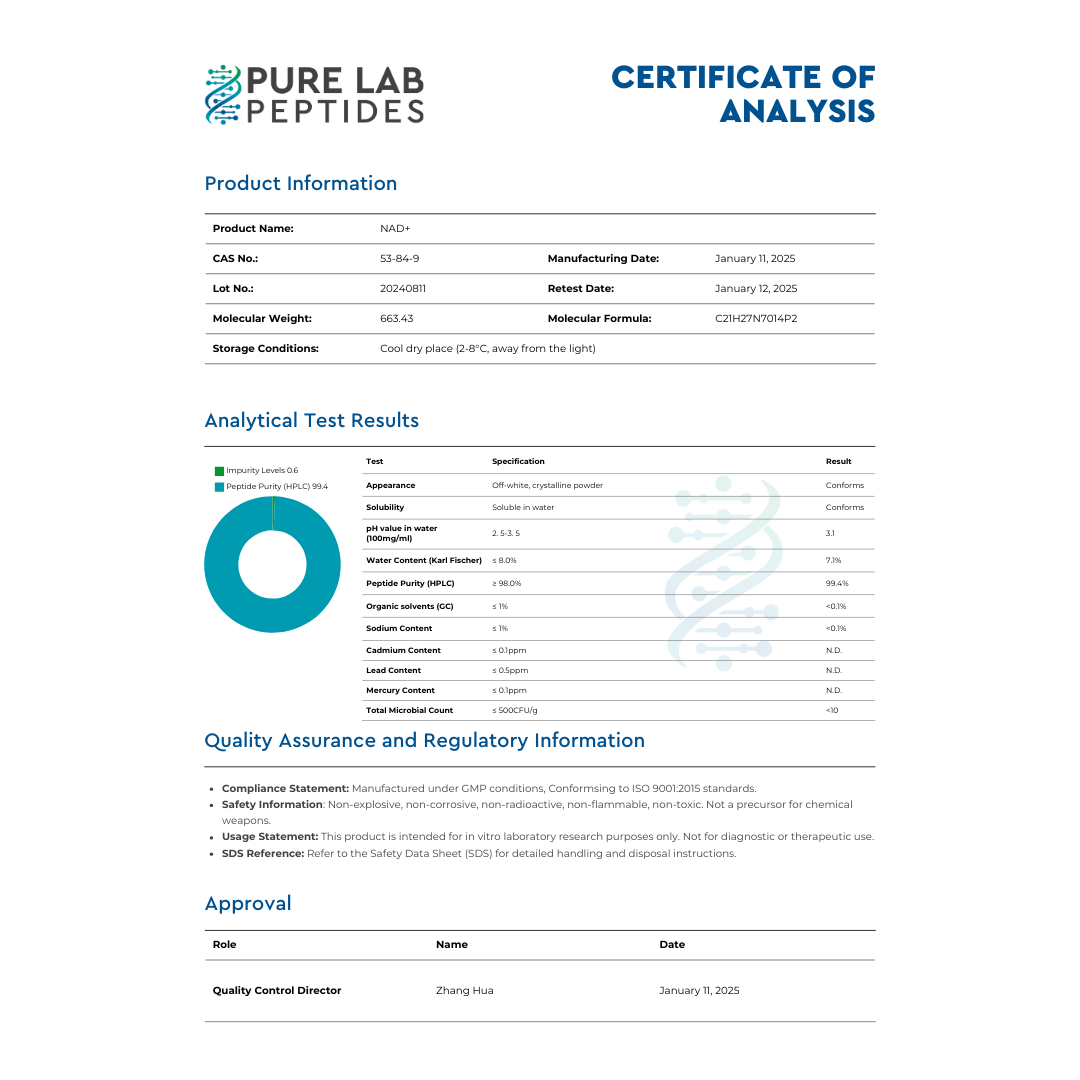
COA documentation matters because it links a listed research material to a batch-specific record. A COA can help document purity, identity-related testing, method notes, lot number, and date.
A COA should not be treated as a broad product claim. It is a technical record that supports research procurement review.
A certificate of analysis should show the compound name, lot number, test date or COA date, purity result, method notes, and supplier or laboratory documentation source. FDA labeling guidance for IVD products highlights traceability through lot or control numbers and storage information as part of labeling discipline in that context [27].
For NAD+ research materials, the same practical idea applies: the COA should match the product listing and label.
Researchers can review COA consistency by checking whether the compound name, lot number, and method summary match across the product page, COA, and label. If a record uses NAD+, NADH, NMN, or NR inconsistently, that should be resolved before procurement.
Consistency is a documentation issue. It is not a product-performance claim.

HPLC and LC-MS answer different documentation questions. HPLC can support purity review by separating components under defined analytical conditions, while LC-MS can support identity review by adding mass-based evidence [18].
A stronger record often uses multiple evidence types. Schymanski and colleagues proposed confidence levels for small-molecule identification using evidence such as exact mass, spectral data, and reference information [25].
| Method | Documentation Role | What It Can Support | What It Cannot Do Alone |
|---|---|---|---|
| HPLC | Separation-based purity review | Assay purity and chromatographic profile [21] | Complete identity confirmation |
| LC-MS | Mass-based identity support | Mass-to-charge evidence and related spectral review [18] | Full documentation context without batch matching |
| COA record | Batch-specific documentation | Lot, date, method summary, and reported values | Scientific claim interpretation |
| Literature source | Research context | Pathway or analytical background | Product-use positioning |
HPLC supports purity review by separating analytes and related components under defined conditions. NAD+ measurement literature has used high-performance liquid chromatography methods to quantify NAD+ in cells and tissues [21].
For product-page purposes, HPLC data should be discussed as analytical documentation. It should not be presented as a standalone guarantee of complete identity.
LC-MS supports identity review by pairing liquid chromatography with mass spectrometry. Targeted LC-MS methods have been developed for NAD+ metabolome measurement, and the literature discusses the technical challenges of reliable quantification for NAD-related metabolites [18].
A research-safe lab-test verification workflow can include:
Lot traceability helps connect the physical research material to its documentation record. Without lot-level alignment, a COA may be less useful for procurement review.
For NAD+ research buyers, traceability is part of supplier evaluation. It helps confirm that the label, COA, and product documentation describe the same batch.
Lot numbers support research procurement by linking a product listing to batch-level documentation. FDA labeling guidance for IVD products identifies lot or control number traceability as a label element in that regulatory context [27].
The same concept is useful on RUO product pages. A lot number helps a technical buyer evaluate whether the COA and product record match.
Storage documentation adds context for maintaining a research material record. It can include storage condition notes, label consistency, and laboratory recordkeeping requirements.
NAD+ analytical literature also shows that NAD-related metabolites can require careful analytical handling in measurement workflows, especially when biological matrices and redox-sensitive compounds are involved [19]. Product-page storage documentation should remain a recordkeeping topic, not practical non-laboratory guidance.
Labeling consistency helps prevent ambiguity. A research material record should align the compound name, lot number, COA details, and storage notes.
This is especially important for NAD+ because related terms such as NADH, NMN, NR, and nicotinamide can appear in nearby literature. A product page should not blur those entities.
Labels should align with batch documentation by using the same compound name and lot reference shown on the COA. If the listing uses NAD+, the COA should not leave the identity unclear.
For procurement teams, alignment is a basic documentation checkpoint. It supports traceability and reduces review friction.
Record consistency matters because a product page is part of a broader documentation system. The product description, COA, label, and internal record should support one another.
When those records conflict, the issue is not an SEO issue. It is a documentation issue that should be resolved before product evaluation continues.

Use this checklist to keep product-page review focused on research documentation.
Research buyers should compare documentation depth, not claims. Useful comparison points include COA availability, method disclosure, lot traceability, product description clarity, and whether the page stays within RUO language.
This framework also helps avoid keyword traps. A page can rank for commercial research intent without becoming a consumer buying guide.
Pure Lab Peptides can present NAD+ documentation clearly by keeping the product page structured around identity, COA access, analytical testing, and lot-specific records. That layout helps research buyers evaluate the material without encouraging non-research interpretations.
Clear documentation also supports trust. It gives the technical buyer concrete records to review.
Several misunderstandings can cause NAD+ product pages to drift out of the research lane.
First, published literature does not equal product-use guidance. A paper may discuss NAD+ in redox biology or mitochondrial models, but the product page should still focus on RUO documentation.
Second, a purity percentage does not prove complete compound identity. Identification confidence improves when records include method context and orthogonal evidence, such as mass-based or reference-standard information [25].
Third, a COA should be batch-specific. A generic document is less useful than a record connected to a lot number.
Fourth, catalog amounts are listing specifications. They should not be framed as practical instructions.
Fifth, related entities should not be merged. NAD+, NADH, NMN, and NR belong in the same literature lane, but they are not the same product listing [15].
Commercial keywords need RUO framing because the search phrase alone does not explain the intended research context. The safe phrase is buy NAD+ for research, not a standalone commercial prompt.
This article answers the commercial research query by prioritizing documentation. That makes the page useful for technical procurement without moving into consumer copy.
Boundary-sensitive terms should be routed into controlled editorial sections only when they help explain what the page is not claiming. They should not be used in headings, metadata, CTA language, or product positioning.
For this page, the safest route is to keep the publishable article centered on NAD+ identity, research literature, COA review, analytical testing, lot traceability, and RUO labeling.
Pure Lab Peptides supplies compounds for laboratory research use only. Products are not intended for human or animal consumption, diagnostic use, therapeutic use, clinical use, veterinary use, or as food, drugs, cosmetics, dietary supplements, or household products. Researchers are responsible for ensuring lawful, appropriate handling and use in accordance with applicable regulations and institutional guidelines.
Review the product-page documentation, COA details, and RUO labeling before evaluating this compound for laboratory research.
Research use only means NAD+ is intended solely for laboratory research contexts. This designation indicates that materials are not intended for human or animal consumption. Researchers should interpret all documentation, COA details, and batch-specific testing as research-focused, ensuring that experimental use complies with institutional and regulatory guidelines.
Researchers should review NAD+ documentation by examining certificates of analysis, lot traceability, and analytical testing results. COA review ensures that peptide identity, purity, and batch-specific data align with the material received. Proper documentation review supports RUO compliance and helps verify consistency across experimental materials.
Common analytical methods for NAD+ include high-performance liquid chromatography (HPLC) and mass spectrometry (LC-MS). These techniques confirm peptide identity, verify molecular weight, and support compound characterization. Researchers rely on these methods to ensure that NAD+ materials meet laboratory research standards and COA specifications.
Lot traceability ensures that each batch of NAD+ can be linked to its specific certificate of analysis, analytical testing data, and storage history. This traceability is crucial for maintaining consistent experimental conditions and verifying compound integrity in preclinical and in vitro research models.
NAD+ product pages should clearly separate language from consumer or therapeutic claims. Terms such as nootropic, cognitive enhancement, and peptide therapy can drift into consumer-facing language if not controlled. RUO pages must focus on compound identity, COA review, analytical testing, lot traceability, and documentation boundaries.
Researchers should consider the quality of COA documentation, the presence of batch-specific analytical testing, and RUO labeling. Evaluating supplier documentation, purity verification, and compound identity ensures that NAD+ materials meet research-use-only standards and that experimental results are supported by reliable documentation.
The following authors are recognized for published research that helped shape the scientific context discussed in this article.
Author profile: UCSF Profiles
Eric Verdin is a scientific author whose publications are relevant to NAD+ metabolism, cellular cofactor biology, and pathway-focused research in metabolic and mitochondrial systems. His work helps frame how NAD+ literature discusses redox state, sirtuin-linked enzyme systems, DNA repair context, and model-specific interpretation. For this product-page research context, those publications are useful because they support a clear separation between published literature and product claims while keeping the discussion focused on compound identity, pathway context, and research documentation. The article’s metabolic and mitochondrial research lane draws on that type of literature to define scientific background without extending it into applied-use language.
Selected publications:
Author profile: City of Hope Profile
Charles Brenner is a scientific author whose publications are relevant to NAD+ pathway research, nicotinamide riboside precursor literature, and analytical measurement of the NAD+ metabolome. His work is especially useful for documentation-focused product pages because it connects biochemical pathway context with LC-MS and HPLC-based analytical discussion. In the NAD+ research lane, these publications help support careful interpretation of related entities such as NR and NMN, while keeping the product page centered on compound characterization, laboratory records, and method-aware review. This is directly relevant to the article’s emphasis on supplier documentation and published literature as research context.
Selected publications:
This research disclaimer clarifies how this page handles published literature and terminology surrounding NAD+. In this product-page content, terms such as nootropic, cognitive enhancement, mental clarity, brain health, nasal spray, peptide therapy, neuroprotective effects, effects of NAD, and efficacy of NAD can drift into consumer-facing, administration-focused, clinical-use, wellness, or product-claim language when framed incorrectly. These terms are included strictly as research-language examples rather than indications of use or outcomes.
Here, all such phrases are treated in a model-specific research context. The focus remains on NAD+ compound identity, COA review, analytical testing, peptide purity, lot traceability, RUO labeling, product documentation, and published literature boundaries. Discussions of absorption, bioavailability, clinical outcomes, and wellness language are maintained only as context for laboratory research and are separate from any product positioning or consumer-use interpretation.
Discount Applied Successfully!
Your savings have been added to the cart.




There are no reviews yet.