


$59.99
Research Studies:


FREE Shipping on
orders over $200
ALL ARTICLES AND PRODUCT INFORMATION PROVIDED ON THIS WEBSITE ARE FOR INFORMATIONAL AND EDUCATIONAL PURPOSES ONLY. The products offered on this website are intended solely for research and laboratory use. These products are not intended for human or animal consumption. They are not medicines or drugs and have not been evaluated or approved by the FDA to diagnose, treat, cure, or prevent any disease or medical condition. Any form of bodily introduction is strictly prohibited by law.
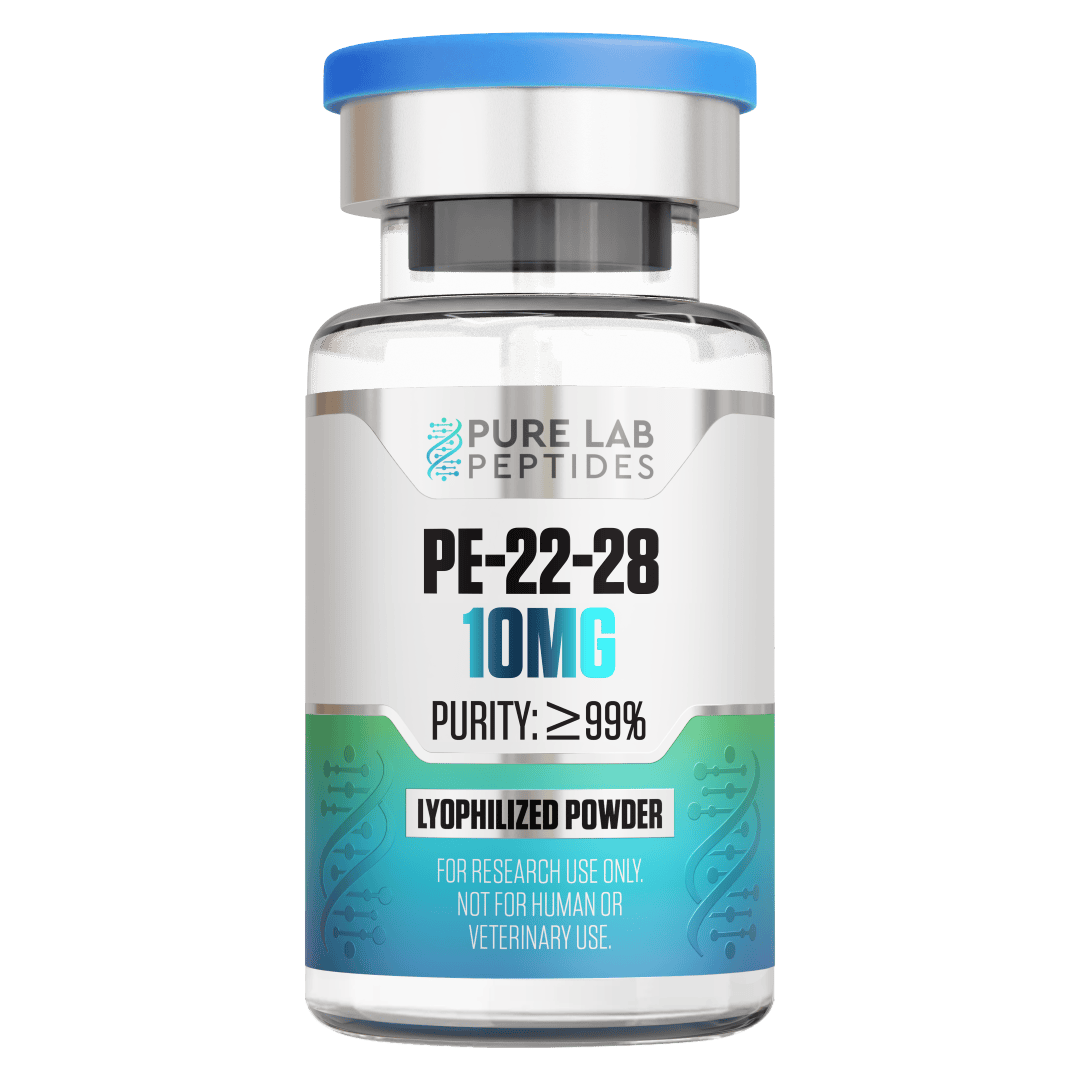
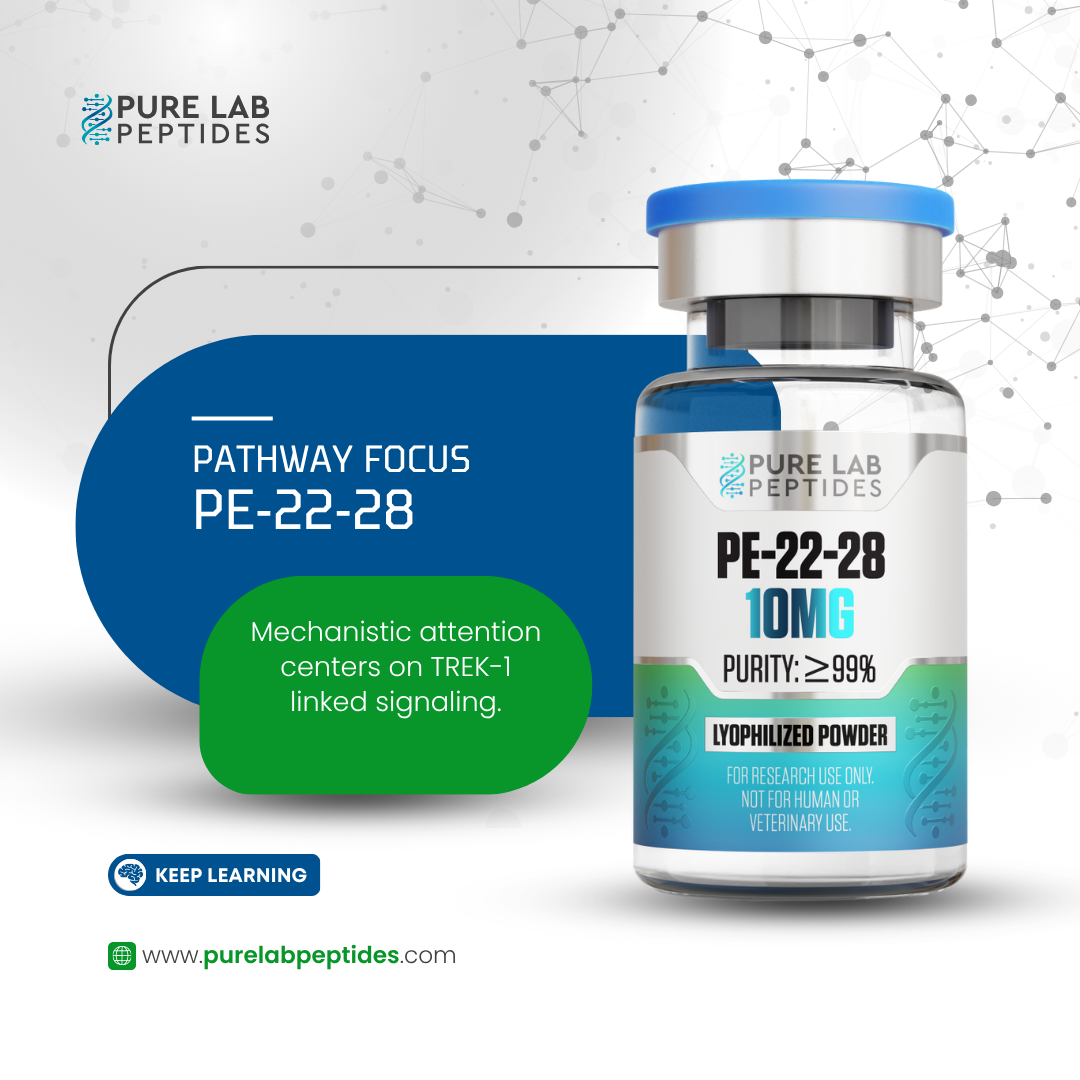
PE-22-28 10mg is a research-use-only laboratory material supplied for controlled research workflows, compound characterization, and analytical documentation review. It is manufactured under rigorous quality standards to support consistency, traceability, and batch-specific verification for qualified laboratory settings.
PE-22-28 10mg is intended strictly for laboratory research use only. This product is not intended for human or animal consumption, therapeutic use, diagnostic use, clinical use, veterinary use, or as a food, drug, cosmetic, dietary supplement, or household product.
| CAS No. | 1801959-12-5 |
|---|---|
| Purity | ≥99% |
| Sequence | GVSWGLR |
| Molecular Formula | C35H55N11O9 |
| Molecular Weight | 773.89 g/mol |
| Applications | Depression models, neurogenesis studies, stroke recovery, TREK-1 inhibition |
| Synthesis | Solid-phase synthesis |
| Solubility | Soluble in water or 1% acetic acid |
| Stability & Storage | Stable for up to 24 months at -20°C. After reconstitution, may be stored at 4°C for up to 4 weeks or at -20°C for up to 6 months. |
| Appearance | White lyophilized powder |
| Shipping Conditions | Shipped at ambient temperature; once received, store at -20°C |
| Regulatory/Compliance | Manufactured in a facility that adheres to cGMP guidelines |
| Safety Information | Refer to provided MSDS |
Consider these supplementary peptides for a comprehensive research approach.
Researchers who buy PE-22-28 for research are usually evaluating a short neuropeptide-related research material through compound identity, literature context, and documentation rather than consumer-facing claims. Published literature describes PE 22-28 as a seven-amino-acid spadin analog examined in TREK-1 channel model systems, while PubChem lists the compound identity record for PE 22-28 under CID 165437303 [1] [2]. This page frames PE-22-28 as a research-use-only peptide listing for laboratory documentation review, COA evaluation, analytical testing, and RUO procurement decisions.
Researchers looking to buy PE-22-28 for research should first confirm that the listing is RUO-only, then review compound identity, COA availability, purity testing, lot traceability, and relevant literature boundaries. Products discussed in this article are intended for laboratory research use only and are not intended for human or animal consumption. Scientific context should support documentation review, not product claims [2].
Commercial research intent should be translated into a documentation-first workflow. Instead of asking whether a peptide is positioned for consumer outcomes, a technical procurement team should ask whether the product page, COA, label, and batch records describe the same PE-22-28 research material.
For PE-22-28, the procurement question starts with identity. PubChem lists a PE 22-28 compound record with formula C35H55N11O9, while the 2017 spadin analog study describes PE 22-28 as a seven-amino-acid peptide examined in hTREK-1 model systems [1] [2].
Start with the documents that reduce ambiguity: the product listing, batch-specific certificate of analysis, lot number, purity data, identity testing summary, and storage documentation. FDA analytical-method guidance for regulated environments emphasizes that analytical procedures are used to assess identity, strength, quality, purity, and potency, which makes method documentation a useful framework for research-material review even when the page itself remains RUO-focused [17].
A PE-22-28 listing should also keep names consistent. PE-22-28, PE 22-28, and PE 22 28 may appear in search behavior or literature notes, but the listing and COA should make the canonical peptide identity clear.
RUO labeling sets the page context before scientific details are interpreted. It tells laboratory buyers that the material is supplied for laboratory research use only and that the product page is not a consumer, clinical, veterinary, wellness, cosmetic, or personal-use guide.
That boundary also protects the quality of the research discussion. A page can summarize TREK-1, spadin, sortilin-derived peptide context, HPLC, LC-MS, and molecular weight without implying that the research material is intended for applications outside laboratory research.
PE-22-28 appears in the literature as a shortened spadin analog. In the 2017 study, researchers described PE 22-28 as a seven-amino-acid peptide derived from spadin degradation products and evaluated it in TREK-1-related model systems [2].
This makes PE-22-28 research a narrow neuropeptide research topic. The relevant literature lane includes spadin, sortilin, TREK-1, two-pore-domain potassium channels, neuronal signal models, and analytical documentation.
PE-22-28 is best classified for this product-page article as a short synthetic peptide in a neuropeptide research lane. PubChem’s compound record provides a database-level identity reference, while the peer-reviewed spadin analog paper provides the research context in which PE 22-28 was described [1] [2].
Research classification should not be confused with intended application. Classification helps the reader understand which literature, target nomenclature, and analytical records are relevant to a research peptide.
The “22-28” naming reflects the shortened analog context in the spadin literature. The 2017 publication explicitly discusses PE 22-28 among shortened spadin analogs, making this naming convention important for aligning a product listing with the cited research lane [2].
Catalog clarity matters because small naming differences can create procurement confusion. Product pages, labels, and COAs should use consistent naming so a laboratory buyer can match the material to its documentation.
Peptide identity review should connect the compound name, formula or molecular weight, sequence data when available, lot number, and analytical results. For synthetic peptides, mass spectrometry is widely used to support identity and impurity characterization, while chromatographic techniques help document purity-related attributes [19] [21].
Catalog clarity is especially important for PE-22-28 because the same research lane also includes spadin, sortilin-derived fragments, and other analogs. A clear listing helps separate the target compound from nearby same-lane entities.
A PE-22-28 product page should function as a research documentation guide. It should help qualified research buyers review identity, literature context, COA information, testing methods, and supplier documentation.
That is different from a general wellness article or a consumer buying guide. The page should not turn TREK-1 pathway context, neuronal models, or spadin literature into product-performance claims.
Research use means the page is built for laboratory research, documentation review, and procurement evaluation. In this context, PE-22-28 is discussed as a research material and literature entity, not as a finished consumer product.
A safe RUO product listing should make the intended research-only scope easy to understand. It should also avoid language that could be interpreted as personal, clinical, veterinary, cosmetic, fitness, or wellness positioning.
Research-focused copy can explain what literature has examined, what pathway terms mean, and what documents a buyer should review. It should not convert model-specific findings into claims about the product.
A safer way to frame PE-22-28 research is to separate four lanes: compound identity, published literature, analytical testing, and procurement documentation. Each lane can be useful without becoming a claim.
Molecular identity is the backbone of research procurement. For PE-22-28, identity review can include the compound name, synonyms or naming variants, molecular formula, molecular weight, sequence-related documentation, and batch-specific analytical records.
PubChem lists PE 22-28 with molecular formula C35H55N11O9, which corresponds to a calculated molecular weight of about 773.9 Da based on standard atomic weights [1]. A product page should avoid treating molecular weight as decorative copy; it is a practical field for matching catalog, COA, and analytical records.
Molecular weight matters because LC-MS and related mass-based methods evaluate ions in relation to mass-to-charge values. LC-MS bioanalysis literature describes intact peptide and protein analysis as a way to support molecular-level characterization when paired with suitable method controls [20].
For procurement review, molecular weight is not a standalone proof of identity. It is one documentation field that should align with name, sequence, lot, COA, and analytical outputs.
Sequence data helps establish which peptide is being discussed. In the PE 22-28 literature, the compound is described as a seven-amino-acid analog in the shortened spadin analog series [2].
Sequence information should be treated as a documentation field rather than a marketing feature. For technical review, sequence, formula, and mass data should tell the same story.
Researchers should compare the compound name, alternate naming, molecular formula, molecular weight, sequence information, lot number, COA date, analytical method, and purity result. Reference-standard literature for synthetic peptides notes that identity and quality evaluation may use methods such as chromatography, mass spectrometry, and related orthogonal techniques [22].
The strongest documentation package is internally consistent. A mismatch between a product listing, label, and COA should be resolved before a material is selected for laboratory research.
PE 22-28 sits inside the spadin and TREK-1 research lane. Spadin was described in earlier literature as a peptide derived from sortilin-related processing and studied in relation to TREK-1 channel inhibition [3].
The 2017 PE 22-28 study built on that background by evaluating shortened spadin analogs and reporting PE 22-28 activity in hTREK-1/HEK model systems [2]. For a product page, the safe takeaway is literature context, not a product claim.
Spadin literature helps identify why PE-22-28 appears near sortilin, TREK-1, and potassium channel terminology. The original spadin paper reported interactions between sortilin-related biology and TREK-1, while later review literature summarized TREK-1 as a K2P channel studied in central nervous system models [3] [4].
That literature can inform a research-page explanation. It should not be used to suggest product outcomes.
Shortened spadin analogs require sortilin-derived context because the parent spadin literature connects the peptide family to sortilin-related processing. NCBI and UniProt identify SORT1 as the gene encoding sortilin, a VPS10-domain receptor family protein involved in intracellular sorting and cell-surface receptor functions [8] [9].
For PE-22-28, this context helps research buyers understand why sortilin and spadin appear in the same semantic lane. It does not change the RUO positioning of the material.
TREK-1 is the channel context most closely associated with PE-22-28 literature. NCBI identifies KCNK2 as the gene encoding a two-pore-domain background potassium channel, and UniProt lists the human TREK-1 protein entry under KCNK2 [5] [6].
TREK-1 is also categorized in the K2P potassium channel family. IUPHAR’s Guide to Pharmacology lists TREK-1 in the two-pore-domain potassium channel family with KCNK2 and K2P2.1 naming [7].
TREK-1 modulation refers to model-specific changes in TREK-1 channel activity reported in research settings. PE 22-28 literature used hTREK-1/HEK electrophysiology systems to examine channel inhibition and compare shortened analogs with spadin [2].
That statement belongs in a literature-review lane. It should not be rewritten as a product claim, product effect, or product-performance statement.
TREK-1 context helps map the same-lane scientific entities around PE-22-28. TREK-1 was originally cloned and characterized as a two-pore-domain potassium channel with brain localization, and later K2P literature described the family as background potassium channels involved in membrane potential regulation [10] [12].
Structural and pharmacological resources add more context. RCSB PDB includes a human TREK1 structure entry, and IUPHAR nomenclature work supports consistent K2P channel naming [13] [15].
Potassium channel language can become misleading if it is presented as a consumer-facing outcome. For PE-22-28, potassium channel discussion should stay tied to research models, receptor pathway context, and published literature.
That is why KCNK2, K2P, TREK-1, spadin, and neuronal signal terms belong in the scientific background. They do not create a claim for the research material.
PE-22-28 research overlaps with neuronal signal terminology because TREK-1 is a potassium channel studied in nervous system contexts. K2P channel literature describes leak potassium currents as important contributors to neuronal membrane potential and excitability in research models [14].
For a product page, this supports neuropeptide research relevance. It does not support consumer, wellness, clinical, or personal-use positioning.
Neuronal excitability belongs in the research lane as a model-level concept. Potassium channel activity can influence membrane potential, and TREK-family channels are discussed in literature connected to neuronal signal regulation [12] [14].
PE-22-28 may be reviewed alongside neuronal excitability terms when the discussion is anchored to TREK-1 literature. The article should keep that discussion academic and model-specific.
Spadin and PE 22-28 publications discuss downstream research markers such as CREB phosphorylation, neurogenesis, and synaptogenesis in model systems [2] [3]. The 2017 PE 22-28 paper also compared analogs in relation to TREK-1 activity and related research endpoints [2].
These terms should be handled carefully. They are useful for literature mapping, but they should not become claims about a research material.
Published literature helps researchers understand why PE-22-28 appears in the TREK-1 and spadin research lane. It can also show which model systems, analytical methods, and limitations are relevant.
The key research boundary is simple: literature context is not product positioning. A PE-22-28 product page should explain what studies examined while keeping the Pure Lab Peptides material framed as RUO.
| Research Area | What Literature Examines | Evidence Type | RUO Interpretation |
|---|---|---|---|
| Compound identity | PE 22-28 compound record and shortened spadin analog naming [1] [2] | Database and peer-reviewed literature | Supports identity review, not product claims |
| Spadin and sortilin context | Spadin as a sortilin-related peptide in TREK-1 research [3] [4] | Mechanistic and review literature | Explains same-lane entities |
| TREK-1 potassium channel context | KCNK2/TREK-1 as a K2P potassium channel [5] [7] | Official database and pharmacology resource | Supports pathway terminology |
| Neuronal signal models | K2P channels in neuronal membrane-potential research [12] [14] | Review literature | Supports model-specific interpretation |
| Analytical documentation | HPLC, LC-MS, and mass spectrometry in peptide characterization [19] [20] [21] | Analytical chemistry literature | Supports COA and testing review |
Published findings can support a neutral explanation of PE-22-28’s literature context. They can show that researchers have examined PE 22-28 in hTREK-1 systems, that TREK-1 belongs to the K2P potassium channel family, and that spadin-related literature provides same-lane context [2] [4] [7].
Published findings should not be used as product claims. RUO copy should keep the focus on documentation, literature interpretation, and laboratory research context.
Preclinical literature can identify research models, endpoints, and mechanistic hypotheses. It should remain separate from product positioning because model-specific findings do not define the purpose of a research-use-only material.
Some published literature outside the scope of RUO product positioning may include clinical-use language or therapeutic language. That wording should remain part of source interpretation and should not become a PE-22-28 product-page claim.
Animal models can be useful in published research because they allow investigators to study biological systems under controlled research conditions. The spadin and PE 22-28 literature includes preclinical model discussion alongside cell-based TREK-1 systems [2] [3].
The RUO interpretation is cautious. Findings from model systems should not be translated into claims about the research material.
Claim boundaries keep the page useful for research buyers. They clarify what the article can discuss: compound identity, literature context, pathway terms, COA review, analytical testing, lot traceability, and supplier documentation.
They also clarify what the page should not do. Phrases about product effects or product performance can shift a research page away from RUO positioning if they are framed as claims rather than literature boundaries.
Study language belongs to the source. Product-page language belongs to the supplier’s RUO documentation.
That distinction matters for PE-22-28 because the literature includes neurobiology, TREK-1, synaptic, and pathway terminology. A safe article can summarize those topics while avoiding claims that the research material is intended for outcomes outside laboratory research.
Common misunderstandings to avoid:
Product-page copy should emphasize documentation. The strongest PE-22-28 page answers research procurement questions: What compound is listed? What does the COA show? What method supports purity? What method supports identity? Does the lot number match?
A documentation-first page can still serve commercial research intent. It simply reframes “buy” intent as a technical review of research-use-only materials.
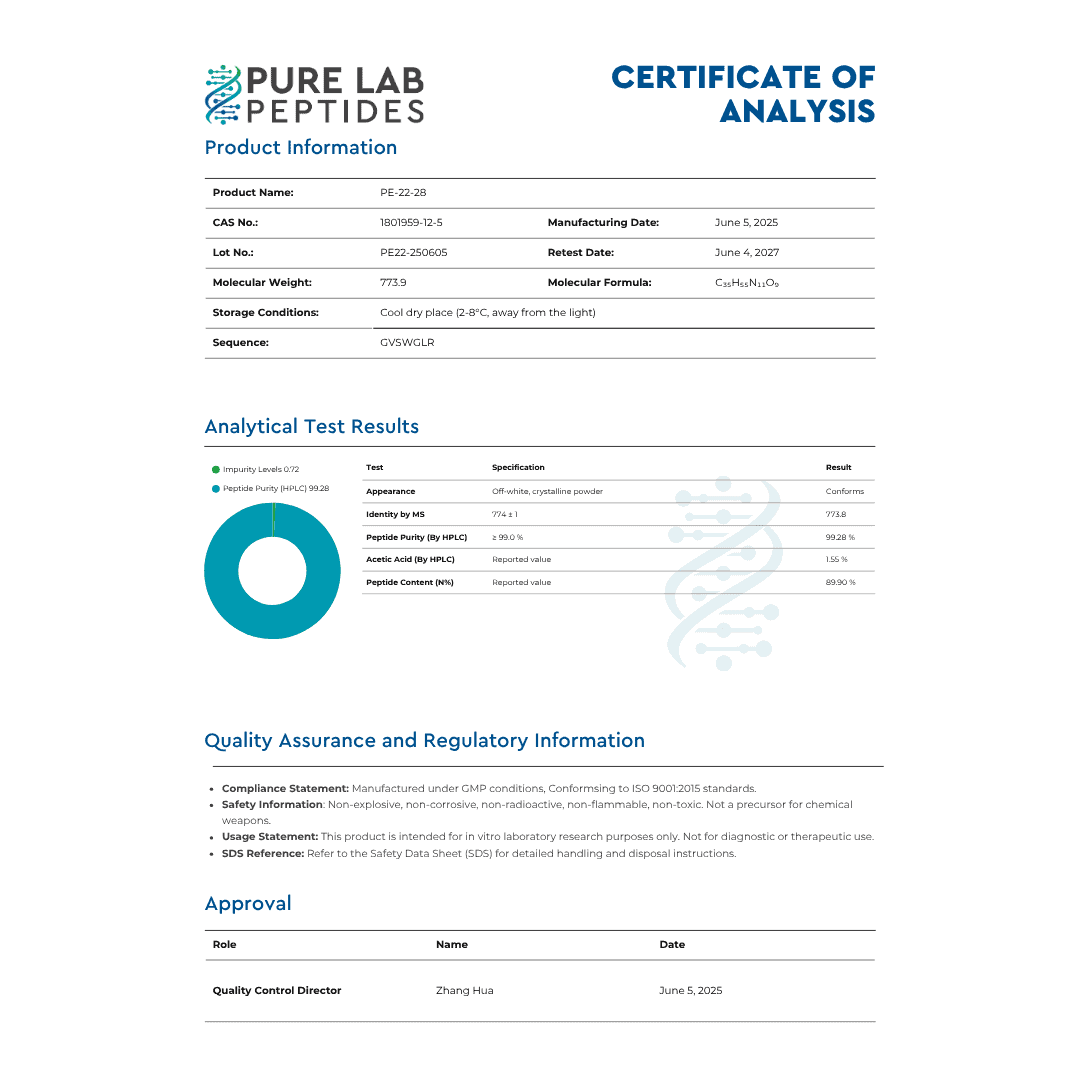
A certificate of analysis is one of the most important documents for a PE-22-28 research material. It should help a laboratory buyer review the identity, purity, lot number, method, date, and supplier documentation for the batch being considered.
Analytical procedure guidance from FDA describes validation characteristics used to assess whether methods are suitable for their intended analytical purpose, including specificity, accuracy, precision, and related performance characteristics [16]. While RUO peptide pages are not the same as regulated drug documentation, the guidance provides a useful analytical-quality vocabulary.
A PE-22-28 COA should confirm the compound name, lot number, reported purity, analytical method, date, and identity-related data when available. If LC-MS or mass spectrometry data are provided, they should align with the expected molecular identity and batch record [20] [21].
The COA should also match the product page. A mismatch between the page, label, and certificate creates avoidable uncertainty.
Certificate fields create a trail for procurement review. The most useful fields include compound name, lot number, method, chromatographic purity value, identity test, date, and source of analysis.
FDA data-integrity guidance for regulated laboratory records emphasizes complete data, reviewable records, and retention of laboratory information such as graphs, charts, and spectra [18]. Those principles are useful for thinking about why research buyers should prefer complete, batch-specific documentation.
Batch-specific documentation matters because a COA should describe the material being evaluated, not a generic reference. Peptide characterization can vary by batch, synthesis, purification, and analytical review, so lot-level alignment is central to procurement confidence [21] [22].
For PE-22-28, batch-specific documentation should make it easy to connect the label, product page, and COA. The research buyer should not have to infer which batch a certificate describes.
Purity and identity are related, but they are not the same. HPLC can support peptide purity review, while LC-MS and mass spectrometry can support identity assessment through mass-related data [19] [20] [21].
The best documentation packages use complementary evidence. A purity value is stronger when paired with identity support, lot traceability, and clear certificate fields.
HPLC is widely used in peptide analysis and purification, including reversed-phase and other chromatographic modes [19]. For research procurement, HPLC documentation can help show whether the batch has a reported purity value and whether the method is identified.
A chromatogram can add useful context. It should be reviewed as part of the broader COA package, not as a stand-alone guarantee.
LC-MS combines liquid chromatography with mass spectrometry and can support peptide identity review by linking chromatographic behavior with mass-related information [20]. For PE-22-28, LC-MS documentation can help connect the listed peptide identity with analytical data.
Identity review is strongest when the expected molecular weight, sequence-related documentation, and mass data align. That alignment helps reduce ambiguity in research procurement.
Mass spectrometry adds molecular-level information that can help characterize synthetic peptides and related impurities [21]. Reference-standard literature also points to the value of orthogonal methods, including chromatography and mass spectrometry, in synthetic peptide quality assessment [22].
A documentation-focused lab-test verification sequence can include:
Additional analytical methods may be relevant for specialized peptide review. For example, chiral HPLC–ESI-MS/MS has been described for amino acid chiral purity assessment in synthetic peptide research contexts [23].
Lot traceability connects the research material to its documentation. A lot number should appear consistently across the product label, COA, and supplier records.
Documentation review becomes weaker when a buyer cannot connect the physical material to a specific analytical record. For PE-22-28, lot traceability is part of the same quality conversation as identity, purity, and analytical testing.
Lot numbers matter because they connect a specific batch to its documentation. A lot-specific COA lets research buyers evaluate whether the certificate applies to the material under review.
Traceability concepts are widely used in regulated supply-chain contexts to connect a traceability lot with identifying records, even though a research peptide product page should remain in its own RUO documentation lane [18]. The practical lesson is simple: documentation should be specific enough to support review.
Lab teams should review whether the product name, alternate naming, lot number, purity statement, and storage documentation are consistent. The label, COA, and listing should not present competing identities.
This is especially important for peptides with naming variants. PE-22-28, PE 22-28, and PE 22 28 should not create confusion inside the same documentation package.
Storage and handling documentation should be framed as laboratory recordkeeping, not product application. A product page should state how the material is supplied, how documentation should be reviewed, and where batch-specific instructions from the supplier should be recorded.
Peptide stability can depend on sequence, environment, aggregation tendency, and other physical factors discussed in peptide stability literature [25]. That is why storage documentation belongs in the procurement file.
If PE-22-28 is supplied as lyophilized material, the listing and documents should state that clearly. The COA and product documentation should also provide batch identifiers, purity method, identity method, and storage notes.
Mass-spectrometry peptide assay recommendations discuss the importance of peptide handling, storage, and quantification practices in laboratory assay contexts [24]. A product page should keep this information in a documentation lane.
Solubility notes should be treated as technical documentation, not application guidance. They can help a laboratory team maintain complete records, but they should not become directions for non-research contexts.
For PE-22-28, solubility documentation should align with supplier records and institutional laboratory procedures. The product page should avoid turning technical notes into user-facing instructions.
Before researchers buy PE-22-28 for research, the review should be structured, documented, and RUO-focused. The goal is to evaluate whether the product listing, literature context, COA, analytical testing, and supplier records support a clear research-material decision.
A practical quality and documentation checklist:
Research buyers should compare the product listing, COA, label, lot number, analytical method summary, storage notes, and any available batch-specific records. The strongest supplier documentation tells a consistent story from product page to certificate.
For PE-22-28, the supplier review should also check whether scientific context is properly separated from product positioning. TREK-1, spadin, sortilin, CREB, neurogenesis, and synaptogenesis can appear in literature context, but they should not be presented as claims for the research material.
Pure Lab Peptides can support documentation review by keeping PE-22-28 product information research-focused, clearly labeled, and tied to available documentation. Research buyers should prioritize identity clarity, COA availability, analytical testing, lot-level traceability, and RUO framing.
Pure Lab Peptides supplies compounds for laboratory research use only. Products are not intended for human or animal consumption, diagnostic use, therapeutic use, clinical use, veterinary use, or as food, drugs, cosmetics, dietary supplements, or household products. Researchers are responsible for ensuring lawful, appropriate handling and use in accordance with applicable regulations and institutional guidelines.
Review the product-page documentation, COA details, and RUO labeling before evaluating this compound for laboratory research.
PE-22-28 peptide is described in research literature as a short peptide connected to the spadin and TREK-1 research lane. It is evaluated through compound identity, pathway context, and documentation, not product-use positioning. Related research terms may include neuron, synapse, neurotransmission, and receptor pathway models when they are kept within published literature boundaries [2].
Research use only means PE-22-28 is intended solely for laboratory research contexts. A RUO product page should focus on peptide identity, COA review, lot traceability, analytical testing, and supplier documentation. It should not frame PE-22-28 as intended for human or animal consumption, clinical application, veterinary application, wellness positioning, or consumer-facing product claims.
Researchers should consider documentation before they buy PE-22-28 for research. The key review points are RUO labeling, batch-specific COA availability, peptide identity, lot number alignment, purity data, and analytical testing support. A strong procurement review also checks whether the product page separates published literature from unsupported product positioning.
Researchers can verify PE-22-28 purity and quality by reviewing batch-specific documentation. A COA should list the compound name, lot number, purity value, testing method, and certificate date. HPLC can support peptide purity review, while LC-MS and mass spectrometry can support identity confirmation when paired with consistent product and batch records [19] [20] [21].
Published literature about PE-22-28 should be interpreted as research context, not product-use guidance. Terms such as rodent, mouse, experiment, action potential, neuroplasticity, serotonergic signaling, neurotrophin, and synaptic plasticity may appear in model-specific literature. They should remain tied to study design, evidence level, and limitations rather than becoming claims for RUO materials.
Language boundaries matter because scientific terms can drift into product claims if they are separated from research context. Boundary-sensitive terms such as cognition and brain-derived neurotrophic factor should be handled as literature language, not product positioning. PE-22-28 pages should redirect readers back to compound identity, COA review, analytical testing, lot traceability, RUO labeling, and published literature boundaries.
The following authors are recognized for published research that helped shape the scientific context discussed in this article.
Author profile: IUPHAR/BPS Guide to Pharmacology Contributor Profile
Jean Mazella is a scientific author whose publications are closely connected to the spadin, sortilin, and TREK-1 research lane discussed in this PE-22-28 article. His work is relevant to the article’s receptor signaling context because it helped define how sortilin-related peptide research intersects with TREK-1 pathway models. His publications also provide useful background for interpreting PE-22-28 as part of a broader neuropeptide research category, with emphasis on literature interpretation, compound characterization, and model-specific pathway discussion.
Selected publications:
Author profile: IPMC-CNRS Member Profile
Catherine Heurteaux is a scientific author whose published work is relevant to TREK-1 potassium channel research, spadin analog literature, and central nervous system research models. Her publications helped shape the pathway-focused background used in this article, especially where PE-22-28 is discussed in relation to shortened spadin analogs and TREK-1 research systems. Her work also supports the broader research context around neuropeptide literature, receptor pathway research, and careful separation between study-level findings and RUO product-page interpretation.
Selected publications:
This research disclaimer explains how PE-22-28 content handles published literature and search-language terms within a research-use-only framework. In neuropeptide research, phrases such as nootropic, cognitive enhancement, mental clarity, brain health, nasal spray, peptide therapy, efficacy, bioavailability, pharmacokinetics, and clinical trial can drift into consumer-facing, administration-focused, wellness, clinical-use, or product-claim language when framed incorrectly.
Here, those phrases are treated only as research-language examples, not as product uses, outcomes, instructions, recommendations, or product positioning. The same caution applies to disease-adjacent or behavioral terms such as major depressive disorder, post-stroke depression, antidepressant, mood, and memory, which should remain tied to published literature boundaries rather than RUO product claims. The focus remains on PE-22-28 compound identity, COA review, analytical testing, peptide purity, lot traceability, research-use-only labeling, product documentation, and model-specific literature interpretation.
Our team is ready to assist you with any inquiries regarding our catalogue of peptides and their applications.
Discount Applied Successfully!
Your savings have been added to the cart.
Pure Lab Peptides
You must be at least 21 years of age to enter this site. By entering, you confirm that you are of legal age and agree to our terms.
For research use only.





There are no reviews yet.